

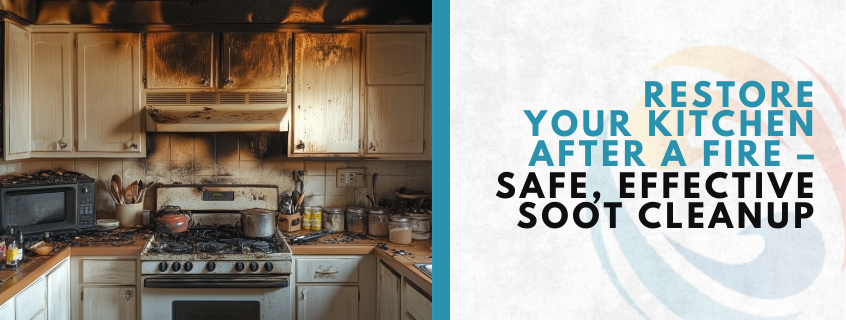
A small kitchen fire in Los Angeles can leave more than burn marks it often leaves soot, smoke odors, and residue that settle on surfaces, cabinets, and appliances. Knowing how to clean soot after a kitchen fire ensures you restore your kitchen safely and effectively. Quick action, proper ventilation, and careful cleaning help reduce lingering smoke odors and prevent long-term damage. By following a step-by-step plan, Los Angeles homeowners can return their kitchens to a clean and healthy state with confidence.
Preparing for Kitchen Fire Cleanup
Before cleaning, ensure safety, assess damage, and understand smoke and soot risks to restore your Los Angeles kitchen efficiently.
1. Ensure Fire Is Extinguished
Check that the fire is fully out and there are no hot embers. Avoid touching anything until the area is safe.
2. Ventilate the Kitchen
Open windows and doors to circulate air. Fans can help remove smoke quickly.
3. Assess Damage
Inspect walls, ceilings, floors, cabinets, and appliances. Take photos for insurance purposes.
4. Document Everything
Record all damages, including soot marks and affected items. Documentation is essential if you plan to file a claim.
5. Wear Protective Gear
Gloves, masks, and eye protection prevent exposure to harmful soot particles while you begin cleanup.
How to Clean Soot After a Kitchen Fire in Los Angeles
A small kitchen fire in Los Angeles can leave soot and smoke; proper cleanup restores safety, hygiene, and a fresh kitchen.
1. Dry-Clean Soot
Use a vacuum with a brush attachment or a chemical-safe sponge. Avoid wet wiping at this stage.
2. Wash Hard Surfaces
Scrub counters, walls, backsplashes, and floors with warm water and mild detergent. Repeat for stubborn stains.
3. Clean Cabinets and Drawers
Remove items and wipe every corner, shelf, and hidden area.
4. Sanitize Utensils and Cookware
Wash dishes, pots, and pans in hot, soapy water. For odor, soak in a vinegar solution.
5. Handle Food Carefully
Discard food exposed to smoke or extinguisher chemicals. Safety first in Los Angeles kitchens.
Remove Smoke Odor in Kitchen
Smoke odor can linger even after cleaning soot. Ventilate the space by keeping windows and doors open and running fans for several days. Place natural odor absorbers like bowls of vinegar, baking soda, or activated charcoal to neutralize smoke. Wash curtains, rugs, towels, and linens to remove trapped odor molecules. Persistent odors may require professional Los Angeles restoration services specializing in the fire damage cleanup process to restore air quality and freshness in the kitchen. Addressing smoke odors promptly keeps your home safe and comfortable.
Professional Fire Damage Cleanup
1. Contact Experts
Call certified restoration specialists in Los Angeles if soot and odors persist.
2. Deep-Cleaning
Professionals use industrial-grade vacuums, chemical cleaners, and deodorizing solutions to remove hidden soot and residues.
3. Air Quality Assessment
Technicians monitor air quality to ensure all harmful particles are eliminated.
4. Structural Inspection
Check walls, ceilings, cabinets, and appliances for heat-related or hidden damage.
5. Electrical Safety Check
Evaluate stoves, microwaves, and other electronics exposed to heat or soot before reuse.
Prevent Future Kitchen Fires
Keep a kitchen-rated fire extinguisher within easy reach and ensure smoke detectors are installed near cooking areas. Use heat-resistant mats under stovetops and maintain safe distances between flammable items and burners. Avoid leaving cooking unattended to reduce the risk of accidents, and teach family members proper fire safety practices.
Regularly inspect appliances for wear and tear, replacing or repairing any that pose potential hazards. Following these precautions not only protects your home but also supports effective Fire Damage Restoration Los Angeles if an incident occurs, helping homeowners minimize damage and maintain a safe, clean kitchen environment.
Odor Removal and Maintaining a Fresh Kitchen
1. Use Natural Absorbers
Bowls of white vinegar, baking soda, or activated charcoal can pull lingering odors from the air and surfaces.
2. Clean Textiles
Curtains, rugs, table linens, and towels trap smoke; wash them immediately.
3. Ventilate Continuously
Open windows and use fans for at least several days after a kitchen fire.
4. Professional Deodorization
If odors remain, contact Los Angeles restoration experts for ozone treatment or thermal fogging to fully eliminate the smoke smell.
5. Maintain Regular Cleaning
Frequent surface cleaning prevents residual particles from settling and reduces recurring odors.
Practical Insights for Safe and Effective Soot Removal
Learning how to clean soot after a kitchen fire in Los Angeles is essential for homeowners who want to restore safety, hygiene, and comfort. Start by confirming the fire is fully out, ventilating the kitchen, and documenting damages. Dry-clean soot, wash surfaces, and sanitize cookware. Discard contaminated food and assess appliances for safety. Use odor absorbers, wash fabrics, and ventilate continuously. Professional restoration may be needed for persistent smoke, hidden soot, or structural damage. Prevent future fires with extinguishers, smoke detectors, and safe cooking practices. By following these steps, Los Angeles homeowners can efficiently restore their kitchens while minimizing long-term damage.
FAQs: How to Clean Soot After a Kitchen Fire
Q1: How do I start cleaning soot?
Use a dry chemical-safe sponge or vacuum first, then wash hard surfaces with mild detergent and warm water.
Q2: Can I save food after a kitchen fire?
No, discard any food exposed to smoke, flames, or chemical residue.
Q3: How do I remove the smoke odor in the kitchen?
Ventilate the area, use natural absorbers, wash fabrics, and consider professional deodorization for persistent smells.
Q4: Should I replace appliances?
Yes, any electronics exposed to heat or soot may be unsafe to reuse.
Q5: When should I call Los Angeles professionals?
For extensive smoke damage, hidden soot, or lingering odors beyond home cleaning methods.